
French Polishing for Builders, Joiners and Property Developers: When Do You Need a Specialist Finisher?
You’d expect most builders, joiners, or developers to handle a coat of paint, varnish, or oil without too much trouble; it’s only reasonable.
French polishing, on the other hand, is an entirely different skillset, and rather than adding it to an already long list of jobs, both clients and contractors can save time and see a better end result when working with a French polishing expert.
This guide takes a closer look at the finer details that make French polishing a specialist service, helps you understand what most builders and joiners can do, and provides a few practical pointers worth knowing if you’re bringing a specialist on-site.
Why Timber Finishing Matters on Trade and Development Projects
Even the most well-planned and executed build will look incomplete if the timber isn’t finished or detailed. While this step is often one of the last taken before the client takes ownership, it’s also one of the most visible, and even minor imperfections will stand out as sloppy or careless.
For developers in particular, consistency across the project can matter as much as quality, and a finish that differs from door to door, step to step, or floor to floor stands out in a way that is hard to fix retrospectively.
Clients investing serious money into their homes typically have high expectations; uniformity matters, and mistakes leave a bitter taste in the mouth.
In-House Finishing vs a Specialist French Polisher
Comparing General Trade Finishing to Specialist French Polishing
Factor |
General Trade Finishing |
Specialist French Polishing |
|---|---|---|
| Skill Required | Achievable with standard trade experience | Years of hand-application practice |
| Typical Finish | Consistent, functional, varnish or oil-based | Deep, reflective shine specific to shellac |
| Time on Site | Fast, fits standard build schedules | Slower, often needs dedicated workshop time |
| Consistency Across Units | Reasonable, with care | High, particularly valuable across multiple plots |
| Best For | Standard doors, skirting, general joinery | Feature staircases, showhomes, heritage or listed properties |
| Risk if Rushed | Uneven sheen, visible brush marks | Blotching, poor adhesion, finish that needs stripping and redoing |
Not sure whether your project needs a specialist finish?
Talk to Stoke French Polishing about what you're building, and we'll tell you honestly whether it's a job for a specialist or something your own team can handle.
When You Can Handle Finishing In-House
Despite the above, there are a handful of select cases where asking a general contractor to finish the timber in certain parts of the build makes sense.
Skirting boards, most internal doors, and architraves (an interior wooden or MDF moulding fitted around a door frame or window to hide joints and gaps), typically only need to look tidy and hold up to normal use, and unless they serve as a genuine feature, in-house finishing is a practical and cost-effective option.
When It’s Worth Bringing in a Specialist
In a nutshell, a specialist French polisher can help you achieve the most attractive and long-lasting finishes on the parts of your home you’d like to show off.
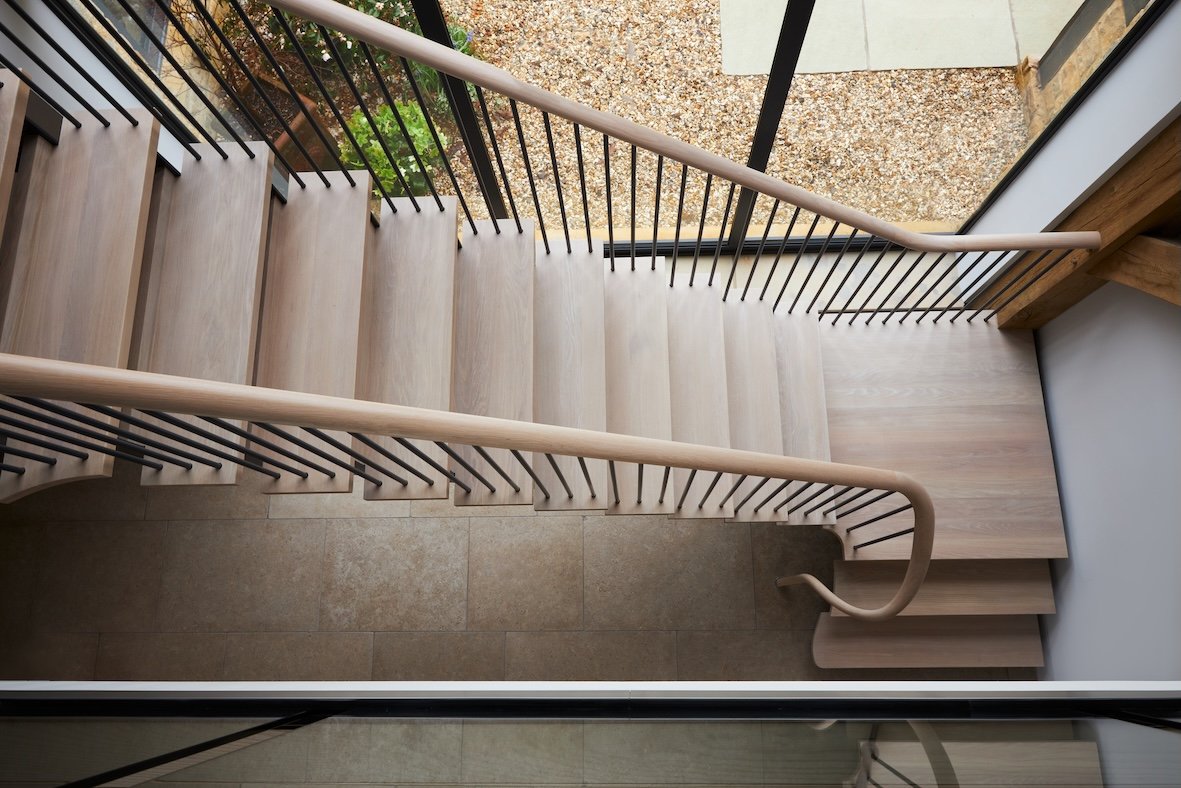
This typically includes feature staircases, bespoke joinery in a showhome, timber flooring in high-end developments, or upgrades to heritage homes where French polishing is part of the brief.
For developers responsible for consistency across multiple units, a specialist will also likely save time, effort, and cost.
Working with a Specialist Finisher on a Build
Working with a French polisher isn’t all that different from coordinating with any other specialist trade; however, it’s worth mentioning that they will need a clean and dust-free environment if working on-site.
For this reason, wherever possible, French polishing experts will often perform the work in their workshop, delivering the final French-polished pieces for assembly when ready. When this isn’t possible, they might request to perform their work in the absence of other contractors.
Planning a project with a specialist finish involved?
Get in touch early and we can advise on timings, workshop vs on-site work, and how to sequence finishing around the rest of your build programme.
French Polishing for Trades and Developers FAQs
-
It can be done on site, but a controlled, dust-free environment gives far better results, particularly for larger pieces. Where possible, staircases and joinery are often finished in a workshop and installed afterwards, though on-site work is sometimes unavoidable depending on the project.
-
As early as possible, ideally once the build programme is confirmed. French polishing takes longer than most other finishing work, so it needs to be planned around, not squeezed in at the end once every other trade has already been scheduled.
-
Most will, particularly for multi-unit developments where the same finish is being applied consistently across several plots. It's worth discussing volume and timescales upfront, since pricing usually reflects both.
-
Minor marks can often be touched up locally without redoing the whole piece, which is one of the practical advantages of the finish. It's still worth protecting finished work with covers during any later trades, since prevention is cheaper and faster than repair.
-
Yes, this is a common request, particularly on heritage properties or developments being finished in phases. Matching existing shellac tone takes experience, since factors like the wood species, age, and light exposure all affect the final colour, but it's a standard part of the job for an experienced polisher.
