
What Is French Polishing? A Guide to French Polishing Furniture
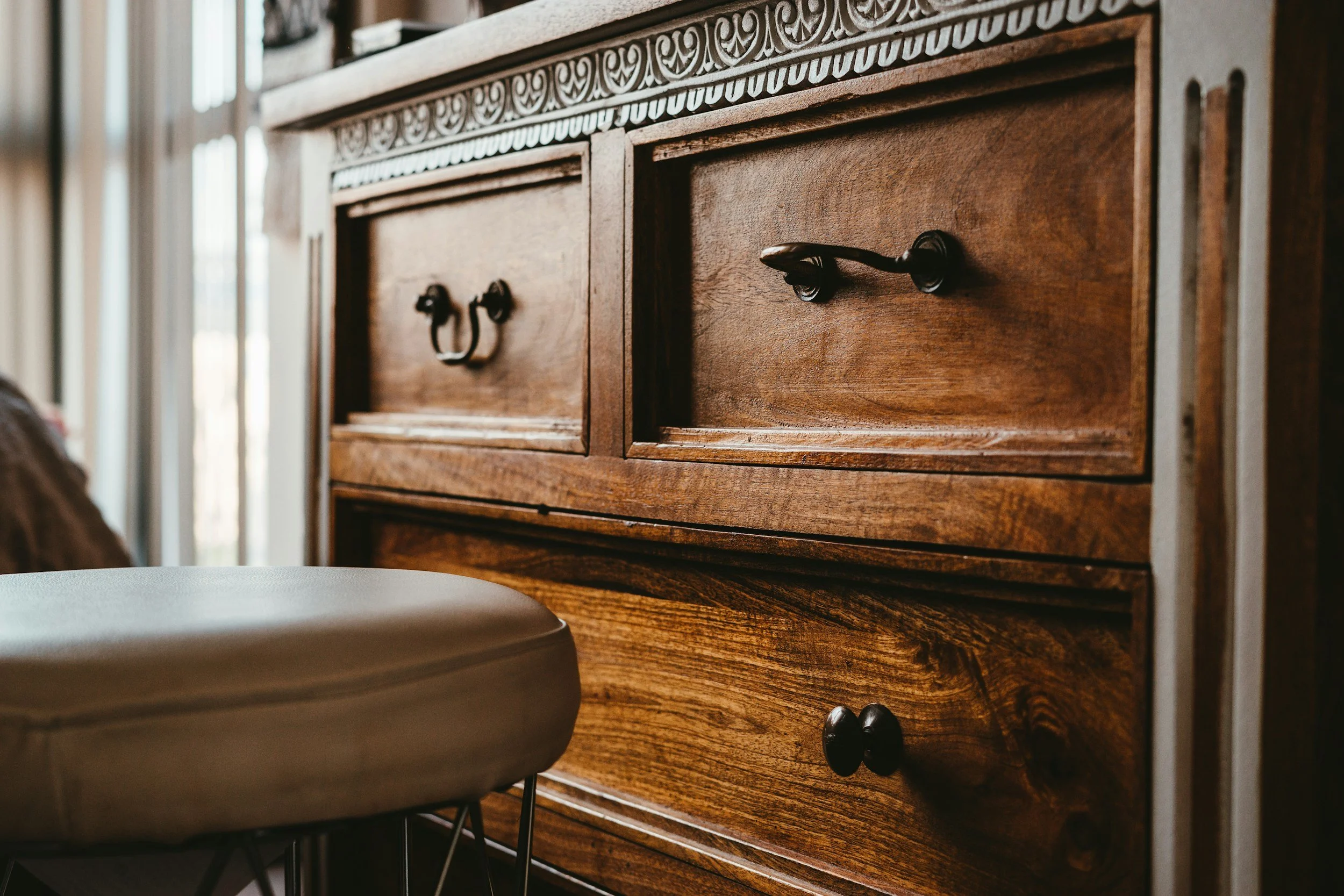
You might not know it, but if you’ve ever run your hand over a piece of wooden furniture buffed to the point that it feels like a deep, dark, wood-grained mirror, you probably encountered French polishing. Even if you’ve never heard the term, it’s a finish we’ve all seen, touched, and recognised as something special.
In this guide, our team of French polishing experts will walk you through what this 200+-year-old technique is, how it works, and why it still remains the gold standard for wooden furniture finishes, even today.
What is French Polishing?
French polishing is a hand-applied wood finishing technique that results in extraordinarily shiny and reflective surfaces that highlight that natural wood grain underneath. Up to dozens of wafer-thin layers of shellac—a natural, tough, glossy resin secreted by the female lac insect—are hand-polished into the wood, staining it to highlight the grain and creating a durable protective coating.
Unlike varnish or lacquer, shellac soaks into the grain with every pass, making it appear to come out of the wood itself, not sit on top as a coating.
What is French polish for furniture made from?
French polish is made from shellac dissolved into denatured alcohol. Shellac is a natural resin created by the female lac insect. It's collected in India and Thailand, processed into flakes, and dissolved into alcohol to create liquid polish used in French polishing.
Different shades of French polish
Shellac is a natural product and is available in different shades, colours, and grades. It ranges from an almost clear blonde to darker hues like garnet or even ruby red.
The shellac's and wood's natural tone, and a few other factors, determine the final polished colour.
Can you repair damaged French-polished surfaces?
Since shellac is an alcohol-soluble resin rather than a synthetic coating, it can be dissolved and reactivated with more alcohol later.
This makes French-polished furniture easier to repair or refresh than polymers that typically have to be removed completely.
French Polish vs Other Timber Finishes
| Finish | Look | Water/Heat Resistance | Repairability | Application Time | Best For |
|---|---|---|---|---|---|
| French Polish | Deep, warm shine; grain visible through the finish | Weak — marks from heat and standing water | Excellent — scuffs can often be spot-repaired | Slow (days) | Antiques, fine furniture, staircases, showpieces |
| Varnish | Even, slightly plastic-looking sheen | Strong | Poor — usually needs full stripping and redoing | Moderate (hours to a day) | Everyday furniture, dining tables, high-use pieces |
| Modern Lacquer | Very even, consistent finish, can be sprayed | Strong | Poor — full respray usually needed | Fast (hours, especially sprayed) | Doors, flooring, runs of matching joinery |
| Oil/Wax | Natural, matte-to-satin look, ages visibly | Weak | Good — easily refreshed with more oil/wax | Fast, but needs reapplying over time | Rustic or contemporary pieces, low-maintenance use |
Not sure if French polishing is the right solution for your timber furniture?
Speak to the timber restoration specialists at Stoke French Polishing for honest and direct advice on what’s best for your home.
How to French Polish Furniture: A Craft for the Patient
French polishing furniture is a slow craft. Hand-finishing the surface across irregular ridges, tight mouldings, and carved details takes time and, depending on the size, condition, and timber dimensions of the furniture, could take up to several days to complete.
For most homeowners having their furniture French polished, the process looks like this:
1. Consultation and Assessment
A French polishing expert can assess your wooden furniture, from smaller items like side tables to entire flights of stairs, and determine the best treatments based on its condition and use. At this point, they’ll also flag anything that needs restoration work first or even suggest a different finish if a French polish isn’t the right fit for the use case.
2. Surface Preparation
French polishing brings out the most beautiful woodgrain; however, it will also permanently embalm any residue, old paint, or imperfections left in the wood. The wood is cleaned and sanded down smooth, exposing only raw grain before the shellac is applied. Where needed, open-grained woods like mahogany or oak may have their pores filled to ensure a smooth surface.
3. Layered Shellac Application
Liquid shellac is applied to the wood by hand, using a special pad made from cotton wadding wrapped in linen. Professional French polishers may apply up to dozens of layers, building depth and sheen. This is a labour-intensive manual process that may take up to days to complete.
4. Polishing & Buffing
Once enough layers have built up, the polisher works through a final stage known as spiriting off. A small amount of methylated spirit is used to remove any last traces of oil from the surface, bringing up the true clarity and shine of the shellac underneath. The piece is buffed by hand until the surface is smooth, clear, and free of any haze or streaking left over from the application process.
5. Protective Finish Application
The shellac itself is the finish, so this stage is more about curing and care than adding another product on top. The polish needs time to fully harden before the piece goes back into use, and in the meantime it's kept somewhere dry and free of dust. Some polishers finish with a light coat of wax, which adds a small amount of extra protection and a slightly softer sheen, though it's optional rather than essential to how the finish performs.
What timber furniture can be French polished?
French polishing works best on hardwoods with attractive natural grain, for example, mahogany, walnut, oak, and maple. It’s most commonly associated with antique and reproduction pieces; however, there’s no need to stop there. At Stoke French Polishing, we bring that deep French polish shine to staircases, doors, and other pieces of architectural timber, as well as drawers, chests, and tables.
That said, it isn't always the right call. Softwoods can take shellac, but the results tend to be less impressive, and pieces that see a lot of daily wear and tear, like kitchen worktops or high-traffic flooring, may be better suited to a tougher finish. This is where an experienced polisher earns their keep: knowing when French polish is the right answer and when it isn't.
Got a piece of timber furniture that needs more than just a polish?
Reach out to Stoke French Polishing to speak to our timber restoration specialists. From simple touch-ups and renovation work to full restorations that requires custom joinery, we handle it all in-house.
French Polishing for Furniture FAQs
How long does a French polished finish last?
With reasonable care, a French polished finish can last for decades, and it's part of why so much Victorian and Edwardian furniture still has its original shine today. It won't last forever without attention, though. Light wear can usually be revived with a fresh coat rather than a full strip-back, which is one of the finish's biggest practical advantages over time.
Is French polish waterproof or heatproof?
No. French polish is more vulnerable to heat and standing water than varnish or modern lacquer, and a hot mug or a wet glass left without a coaster will leave a mark. It's a trade-off for the depth of shine and repairability the finish offers, so it suits showpieces and lower-traffic furniture better than a family dining table used daily.
Can French polish be applied over painted or previously varnished wood?
Not directly. Shellac needs to bond with raw, clean wood to look and perform properly, so any existing paint, varnish, or old finish has to be fully stripped back first. Skipping this step will trap the old finish underneath and affect both the colour and the durability of the new polish.
How much does French polishing cost?
Cost depends on the size of the piece, its condition, and how many layers of shellac it needs. A small side table will cost far less than a full staircase or a set of doors, and any restoration work required beforehand will add to the price. It's best assessed piece by piece rather than quoted as a flat rate.
Can I French polish furniture myself, or is it best left to a professional?
It's possible to learn the basics for small, low-stakes projects, but getting a consistent, high-quality finish takes practice. The technique relies on feel, pressure, and timing that's hard to pick up from a guide alone, and mistakes on antique or valuable pieces can be costly to fix. For anything you care about, it's worth having a professional at least assess it first.
